Brief Summary
Safety in gastric sleeve surgery is not limited to performing the operation laparoscopically. Proper patient selection, preoperative endoscopy, stomach and esophageal evaluation, staple line security, surgical technique and post-surgery follow-up should all be considered together.
Safety and Leak Risk in Gastric Sleeve Surgery
Gastric sleeve surgery is one of the commonly performed procedures in bariatric surgery. However, like every surgical procedure, it requires careful planning, proper technique and structured follow-up. The success of the operation is not only about reducing stomach volume; it is also about managing the entire process safely.
One of the main concerns patients have before gastric sleeve surgery is leak risk. A leak means that stomach contents escape from the staple line created during surgery. Although this complication is uncommon, it is serious and therefore has special importance in surgical safety.
Why Is Safety Important in Gastric Sleeve Surgery?
Safety in gastric sleeve surgery does not depend on a single step. Preoperative evaluation, suitable patient selection, surgical planning, understanding stomach anatomy, creating the staple line carefully and monitoring the patient after surgery should all be managed as part of one process.
Before surgery, the patient’s weight is not the only factor that should be considered. Body mass index, metabolic conditions, reflux symptoms, stomach and esophageal health, previous surgeries, current medications and general health status should also be evaluated.
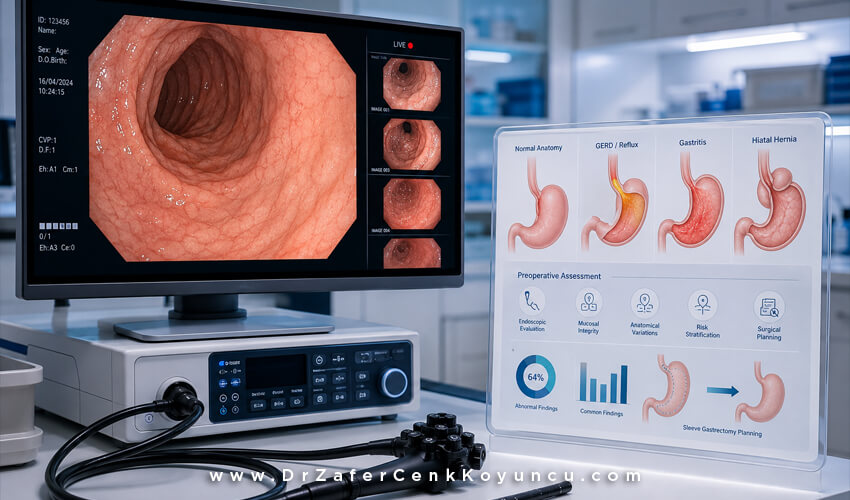
Why Is Endoscopy Important?
Before gastric sleeve surgery, endoscopy can provide important information about the stomach and esophagus. It may help detect reflux-related damage, gastritis, ulcers, hiatal hernia, esophageal problems or other stomach conditions.
These findings can affect the surgical plan. For example, in patients with severe reflux or significant hiatal hernia, the surgical options may need to be reconsidered. Gastric sleeve may be suitable for some patients, while another bariatric procedure may be more appropriate for others.
For this reason, endoscopy is not only a diagnostic tool. It can also help the surgical team select a safer and more suitable strategy.
What Is the Staple Line?
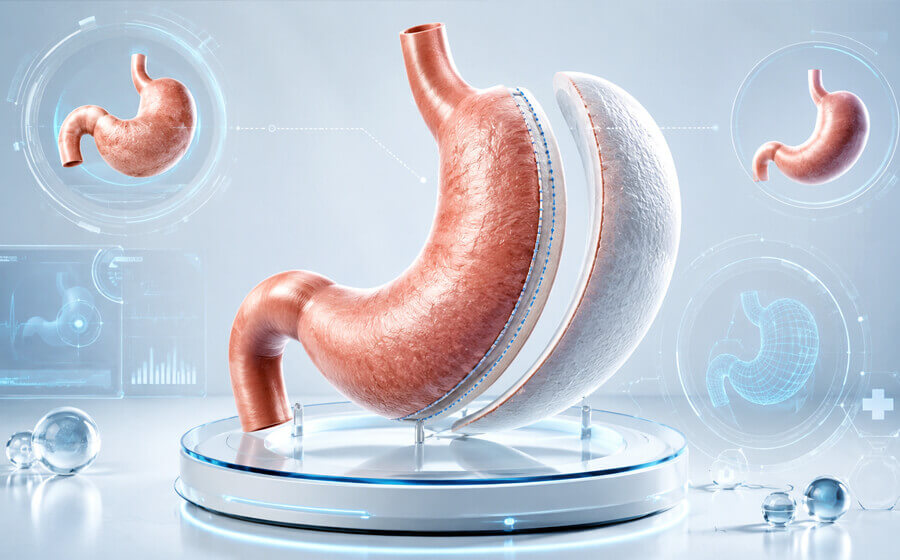
During gastric sleeve surgery, a large portion of the stomach is removed, and the remaining stomach is shaped into a narrow tube. A staple line is created along the stomach tissue during this process. This line is essential for maintaining stomach integrity after surgery.
Staple line safety is related to surgical technique, tissue thickness, blood supply, tension on the line, surgical experience and intraoperative control. Therefore, the staple line should not be seen as a simple mechanical closure. It is one of the most sensitive parts of the operation.
How Can Leak Risk Be Reduced?
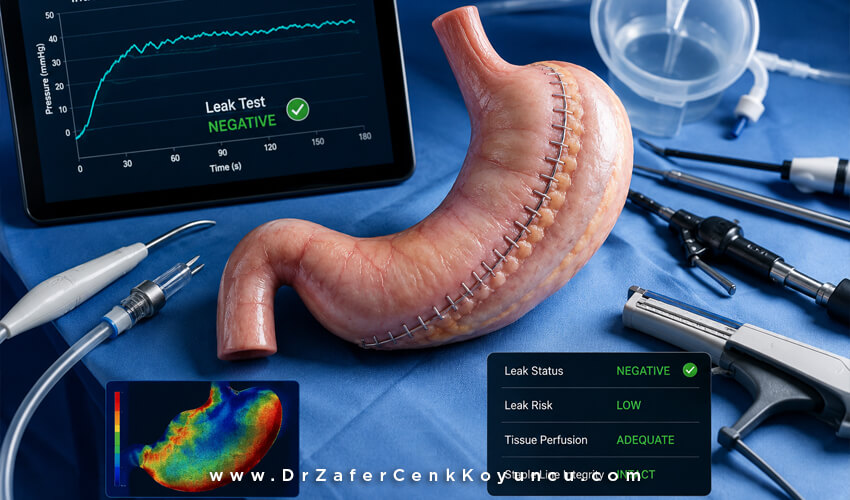
Leak risk cannot be reduced to zero, but several steps may help lower the risk. Proper patient selection, preoperative stomach evaluation, appropriate surgical technique, careful creation of the staple line, correct calibration of the gastric sleeve and close postoperative follow-up are among the key factors.
Some surgeons may use different techniques to reinforce the staple line. The choice of technique may depend on tissue quality, intraoperative findings, surgeon preference and clinical experience. The important point is not to apply the same method to every patient automatically, but to plan the surgery according to the individual patient.
Why Do Surgical Technique and Experience Matter?
Surgical technique is an important factor in gastric sleeve safety. The sleeve should not be left too narrow or irregular, the stomach outlet should be protected, unnecessary tension on the staple line should be avoided and blood supply should be preserved.
Surgical experience is important because gastric sleeve surgery may appear standardized, but every patient has different anatomy, fat distribution, stomach structure and obesity-related conditions. These differences can affect surgical planning.
Post-Surgery Follow-Up Is Part of Safety
Surgical safety does not end in the operating room. After surgery, fluid intake, pain level, fever, pulse, abdominal pain, nausea, general condition and the transition to nutrition should be monitored carefully.
Follow-up continues after discharge. If the patient develops unusual abdominal pain, high fever, severe weakness, persistent vomiting, rapid heartbeat or general deterioration, the medical team should be contacted without delay.
Patient Compliance Also Matters
Patient compliance is another part of safety after gastric sleeve surgery. Following the nutrition plan, respecting the early liquid and food transition stages, attending control visits and following medication or vitamin recommendations are important.
Patients should not change their diet independently in the early period, should not consume foods earlier than recommended and should report symptoms to the medical team promptly.
Conclusion
Safety in gastric sleeve surgery depends on the combined management of endoscopy, proper patient selection, surgical technique, staple line control and postoperative follow-up. Leak risk is uncommon but serious, which is why planning and follow-up are essential.
The best approach is not to apply the same surgical template to every patient. Surgical planning should be individualized according to the patient’s anatomy, health status, metabolic conditions and risk profile.
Plan an Evaluation for a Safer Surgical Process
A safer gastric sleeve process begins with proper evaluation before the surgical decision.
You can plan an initial consultation with the team of Dr. Zafer Cenk Koyuncu to assess endoscopy findings, metabolic conditions, reflux status and surgical suitability in a personalized way.
Request an Expert Evaluation